
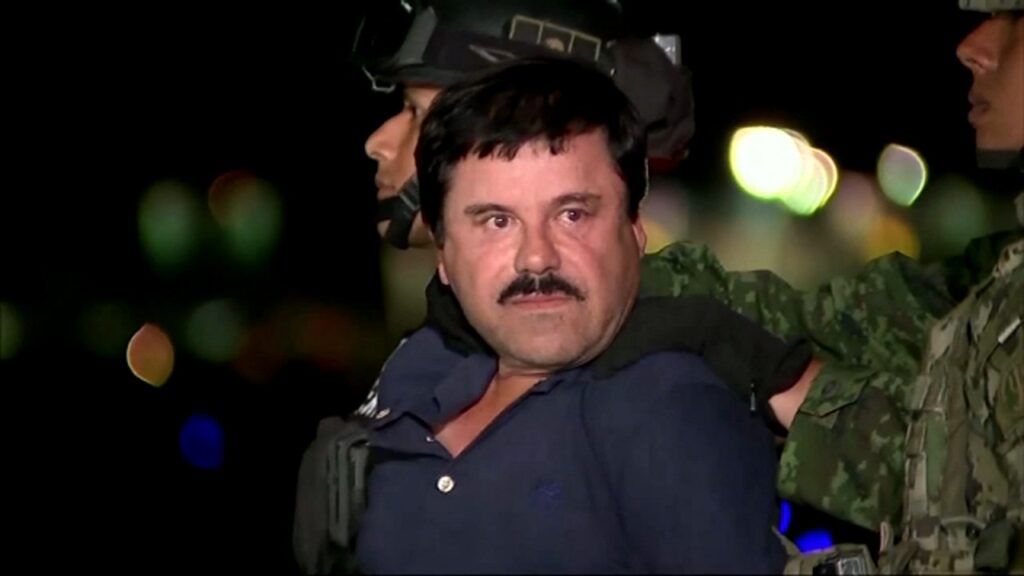
Joaquín ‘El Chapo’ Guzmán is widely known as one of the most influential figures in modern organized crime history. As a former leader of the Sinaloa Cartel, his activities had significant impact on international drug trafficking operations and law enforcement efforts across multiple countries.
This article provides a factual overview of his background, criminal operations, arrests, and legal outcome.
Early Background
Joaquín Guzmán was born in 1957 in the Mexican state of Sinaloa. He grew up in a rural region where illegal drug cultivation had long been present. During the late 1970s and 1980s, he became involved in drug trafficking networks operating in Mexico.
Over time, he developed connections within organized crime groups and rose through their ranks.
By the 1990s and early 2000s, Guzmán had become a leading figure within the Sinaloa Cartel. The organization was involved in large-scale trafficking of narcotics, including cocaine, heroin, methamphetamine, and marijuana, primarily into the United States.
Authorities allege that under his leadership, the cartel developed sophisticated smuggling routes across land borders, air channels, and maritime paths. International investigations connected the organization to extensive criminal networks across North America, Central America, and parts of Europe.
Arrests and Prison Escapes
Guzmán was first arrested in 1993 in Guatemala and later extradited to Mexico. In 2001, he escaped from a Mexican maximum-security prison.
He remained at large for more than a decade before being recaptured in 2014. In 2015, he escaped again from Altiplano prison through a tunnel constructed beneath his cell — an event that drew global media attention and raised questions about prison security systems.
He was captured once more in January 2016 by Mexican authorities.
Extradition and Trial in the United States
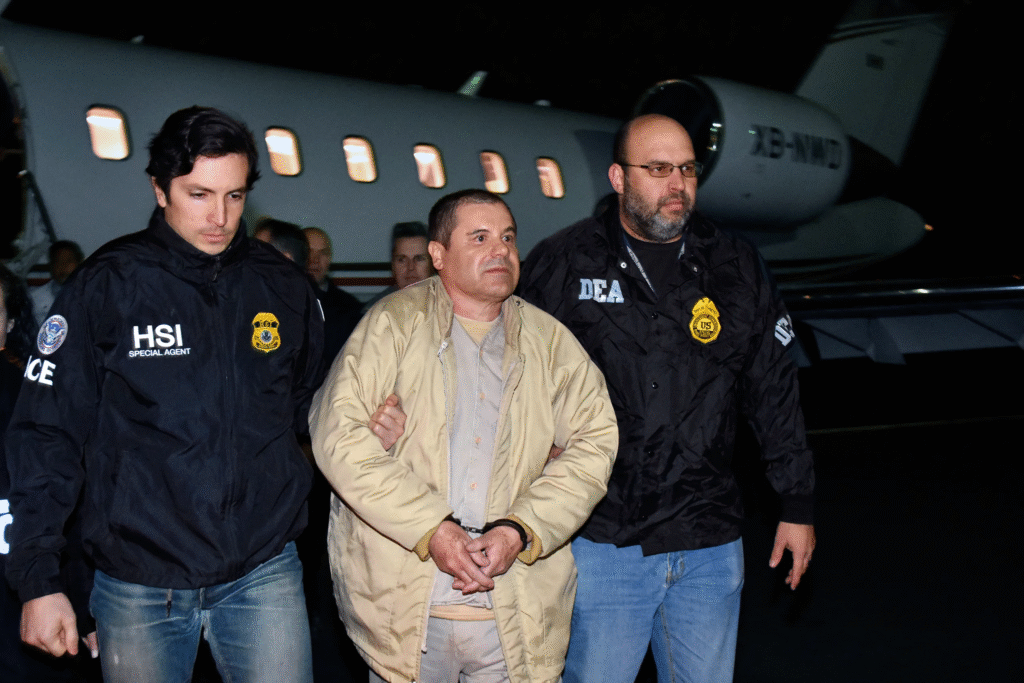
In 2017, Guzmán was extradited to the United States to face federal charges. His trial took place in New York and lasted several months.
In 2019, he was convicted on multiple counts, including drug trafficking, money laundering, and engaging in a continuing criminal enterprise. He was sentenced to life imprisonment plus 30 years.
He is currently serving his sentence at the high-security ADX Florence in Colorado, United States.
The case of Joaquín Guzmán reflects broader challenges faced by governments in combating transnational organized crime. Drug trafficking networks continue to evolve, and authorities worldwide maintain ongoing efforts to disrupt illegal operations and reduce associated violence.
His prosecution marked one of the most significant criminal trials related to international narcotics trafficking in recent history.