
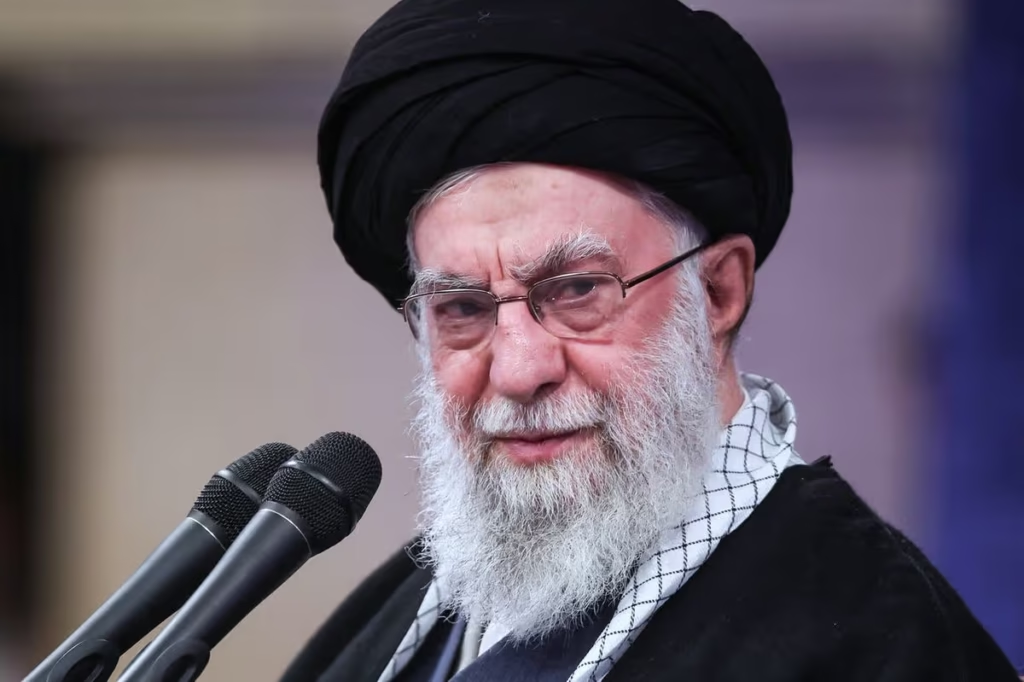
In an unprecedented escalation of conflict in the Middle East, Iran’s Supreme Leader Ayatollah Ali Khamenei has been confirmed killed after a major military operation carried out by the United States and Israel. This momentous event marks a historic turning point that could reshape geopolitical dynamics across the region.
According to Iranian state media and multiple international reports, the 86-year-old leader — who had ruled Iran since 1989 — died when targeted strikes hit key government and military sites, including his secure compound in Tehran. The government has declared 40 days of national mourning and announced public holidays as the nation reels from the shock.
The operation, described by military officials as one of the most extensive in recent history, involved coordinated air and missile strikes aimed at crippling Iran’s command structure, nuclear capabilities, and ballistic defence systems. Alongside Khamenei, several senior commanders and members of his inner circle were reportedly killed in the blitz.
Retaliation and Regional Impact
In the hours following confirmation of Khamenei’s death, Iran’s powerful Revolutionary Guard Corps vowed fierce retaliation. Missile and drone strikes were launched at U.S. military bases and cities in Israel, underscoring the rapidly deteriorating security situation.
World leaders have reacted with a mix of alarm and calls for restraint, fearing that the crisis could spiral into a broader regional conflict. Markets worldwide have responded to heightened risk perceptions, and travel disruptions have been reported across Middle Eastern airspaces.
What Happens Next?
With Iran’s top leadership gone, a power vacuum has emerged, raising questions about succession and political stability. The country’s governing bodies are expected to initiate constitutional procedures to select the next head of state, but intense internal and external pressures could complicate the transition.
This dramatic development not only redefines Iran’s political future but also deepens tensions between global powers. Analysts warn that the full consequences — including the potential for further military engagement or diplomatic negotiations — are yet to unfold.